A great commercial set does more than look good. It needs to support the creative vision, accommodate the production crew, work within the budget, and ultimately help capture the shots that bring a campaign to life.
Whether you're producing a national commercial, a product photography campaign, or branded video content, the decisions made before construction begins can have a major impact on the finished work.
So, what should brands and agencies consider before building a custom set?
Here are five things worth thinking about before construction begins.
1. Start With the Shots, Not Just the Design
Before choosing materials, finishes, or architectural details, it's important to understand what the production actually needs to capture.
A set designed for commercial photography may have different requirements than one built for video. Camera angles, movement, lighting, and equipment all influence how the space should be designed.
At TRG, our set designers work alongside art directors and construction teams to translate creative concepts into physical environments that are production-ready.
As Tosh, one of our in-house set designers, explains, sometimes a feature that makes sense architecturally needs to move because it creates a better composition on camera.
The goal isn't necessarily to design the most realistic room. It's to create the right environment for the shot.
2. Establish a Realistic Budget Early
Creative possibilities are exciting, but every design decision has a cost.
Materials, construction requirements, architectural details, and timelines all influence what can realistically be built. Tosh describes balancing aesthetics with a client's budget as one of the most challenging parts of set design.
"You can design a beautiful space, but if the client can't afford it, then it's not doing anyone any good."
Establishing a clear budget early helps the design and construction teams make informed decisions about where to invest resources and where simpler solutions might achieve the same creative result. fIt also allows teams to identify potential challenges before they become expensive changes during construction.
3. Design for the Camera, Not Just the Physical Space
Unlike a permanent interior, a commercial set doesn't always need to function like a real room.
Walls can be omitted or repositioned. Architectural features can be adjusted. Entire sections of a room may never need to exist.
What matters is what the camera sees.
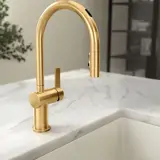
For example, a kitchen designed for everyday use might prioritize workflow and accessibility. A kitchen designed for commercial production might place an island, window, or architectural feature somewhere entirely different to create the strongest composition.
Tosh notes that designing for a particular point of interest within a shot is one of the biggest differences between designing a real-world space and designing a commercial set. This approach gives creative teams more control over lighting, camera placement, and the overall visual story.
4. Account for Equipment and Production Requirements
One of the easiest things to overlook when planning a set is the space required to actually shoot inside it.
Camera equipment, lighting, crew movement, and structural supports can all affect what's possible once production begins.
For example, TRG's MILO motion-control system requires significantly more operating space than a standard camera setup. That means clearances and camera movement need to be considered during the design phase, not after construction is complete.
Structural supports can also influence where a photographer or director can position the camera.
Working through these details early helps prevent a situation where a set looks perfect on paper but limits the shots a production team can capture.
5. Bring Design and Construction Teams Together Early
Set design doesn't happen in a vacuum. It requires collaboration between art directors, set designers, construction teams, photographers, and production staff.
At TRG, the process begins with a creative kickoff, where the client shares inspiration images, mood boards, and campaign goals.
From there, the art directors, set designers, and construction manager review available sets, discuss architectural details, and begin translating the concept into renderings and construction drawings. That collaboration continues throughout the build.
Having these departments working closely together helps everyone stay aligned as the set moves from concept to reality.
The Best Commercial Sets Are Designed With Production in Mind
Custom set construction offers brands and agencies creative flexibility, but successful builds require more than a compelling design. The best results come from considering the budget, timeline, camera requirements, and construction process together, rather than treating them as separate decisions.
At TRG, our in-house art direction, set design, and construction teams work together to create environments tailored to each production's needs. Because a successful commercial set isn't just one that looks great, it's one that makes the entire production work better.