For a long time, virtual production was mostly associated with major film sets, big-budget commercials, and futuristic behind-the-scenes videos of actors standing in front of massive LED walls.
But that is changing.
Virtual production is becoming a practical tool for brands that need more flexibility, more control, and more content from their production investment. It is no longer just Hollywood technology. It is a brand marketing tool.
For companies creating campaigns, product launches, social content, corporate videos, lifestyle imagery, or high-volume visual assets, virtual production opens up new creative possibilities without some of the limitations of traditional location shoots.
What Is Virtual Production?
At its simplest, virtual production blends real-world production with digital environments.
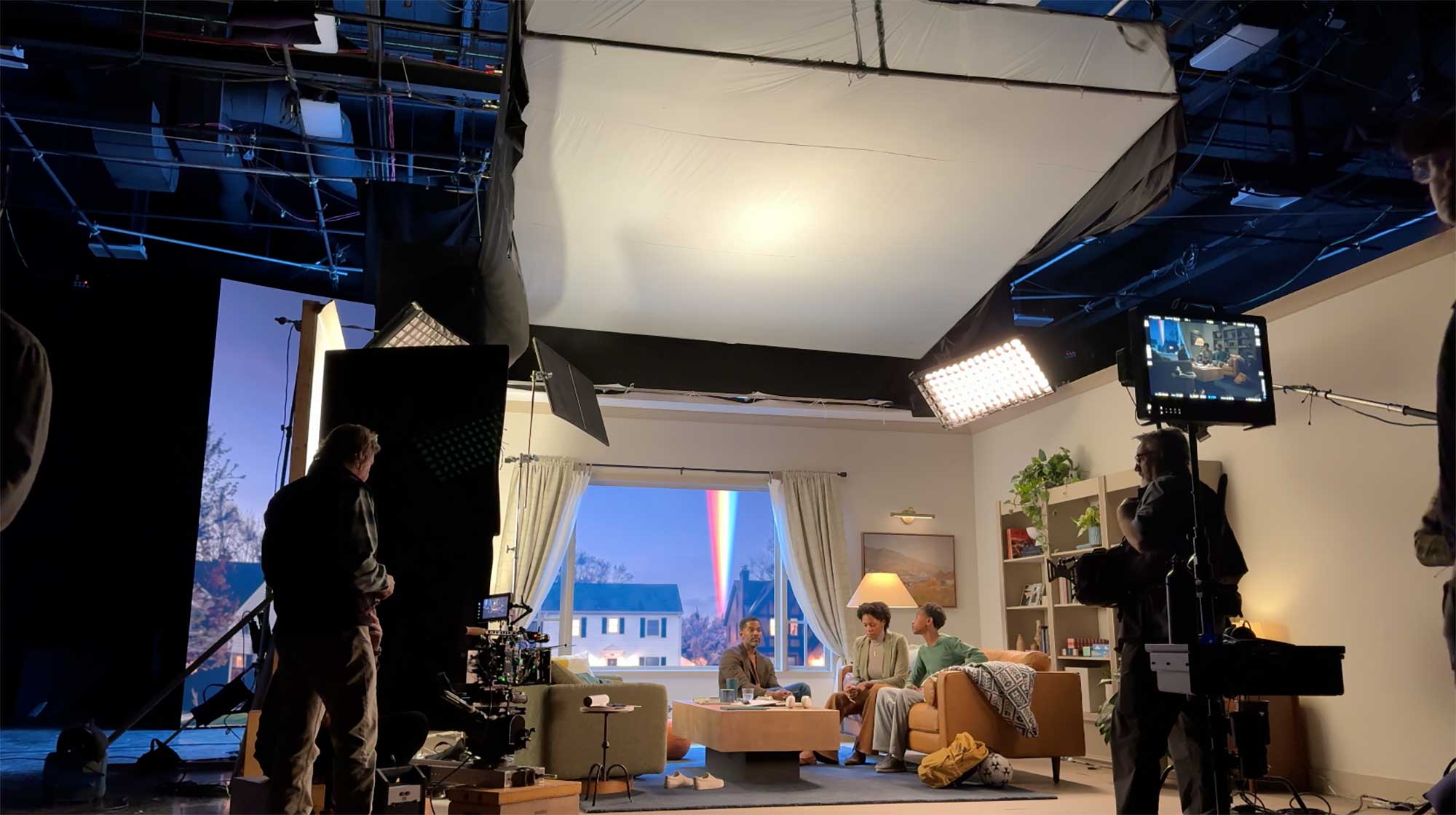
Instead of traveling to a physical location, a brand can place talent, products, or sets in front of an LED wall displaying a custom environment. That environment could be a city street, a mountain landscape, a luxury interior, a seasonal backdrop, a futuristic space, or a branded world built specifically for the campaign.
Unlike a green screen, an LED wall allows the production team to see the environment in real time. That helps with lighting, reflections, framing, and overall creative direction. It also gives clients a clearer sense of what the final image or video will look like while the shoot is happening.
The result is a more flexible production environment where practical sets, physical products, real talent, CGI, lighting, and post-production can all work together.
Why Brands Are Paying Attention
Brands are under more pressure than ever to create content quickly, consistently, and across multiple channels. They need campaign videos, social cutdowns, website banners, product visuals, internal content, paid media, and more.
At the same time, traditional location shoots can come with challenges. Weather can change. Travel can get expensive. Permits can slow things down. Time on location can be limited. Crews may have less control over lighting, sound, space, and continuity.
Virtual production helps solve some of those problems.
It gives brands the ability to create location-driven content without always needing to physically be on location. A summer campaign can be shot in the middle of winter. A product can be shown in multiple environments in one production day. A brand can create a highly specific visual world without relying entirely on what is available nearby.
For marketers, that means more control and more flexibility.
It Is Not About Replacing Real Sets
Virtual production does not mean everything becomes digital.
In fact, some of the strongest virtual production work happens when digital environments are combined with practical set pieces, props, styling, lighting, and real production design. A physical chair, table, appliance, product, or foreground element can help ground the scene and make the environment feel believable.
That blend is where things get interesting.
A brand might use a virtual background to create a larger environment, while still building part of the set physically. Or a product might be shot practically, then supported with digital extensions or CGI elements. A campaign might use an LED wall for one part of the story and traditional studio sets for another.
The goal is not to choose between practical production and digital production. The goal is to use the right tools for the right creative challenge.
Where Virtual Production Can Help
Virtual production can be especially useful when a brand needs a setting that would be difficult, expensive, or inefficient to capture in a traditional way.
That might include:
- Seasonal environments
- Hard-to-access locations
- Multiple locations in one shoot
- Branded digital worlds
- Product storytelling
- Controlled lifestyle scenes
- Campaigns that need consistency across many assets
- Visuals that need to feel elevated or cinematic
For example, a brand could show a product in several environments without moving the entire crew. A company could create a polished interview or brand film with a custom backdrop instead of a standard office setting. A product launch could take place in a designed world that reflects the brand’s identity instead of relying on a generic studio background.
Virtual production can also help brands get more mileage out of one shoot. Once the environment is built, it can often be adjusted, reused, or adapted for multiple assets, formats, and campaign needs.
The Planning Still Matters
Like any production tool, virtual production works best when it is planned with intention.
The creative team needs to understand what the brand is trying to communicate, where the final content will live, and how the virtual environment supports the story. The background cannot just look cool. It has to make sense for the product, audience, and campaign.
That planning affects everything: set design, lighting, camera movement, talent direction, product placement, CGI, post-production, and final deliverables.
At TRG Multimedia, this is where our full-service approach matters. Because our teams work across photography, video, set design, CGI, motion, editing, and post-production, we can help brands decide when virtual production makes sense and how to use it effectively.
Sometimes the answer is an LED wall. Sometimes it is a practical set. Sometimes it is CGI. Sometimes it is a mix of all three.
The value is knowing how to bring those pieces together.
A Smarter Way to Create Brand Content
Virtual production gives brands more options.
It can help reduce some of the friction that comes with location shoots. It can create more controlled environments. It can support more efficient production days. It can make ambitious creative ideas more achievable.
But the technology itself is only part of the equation.
What makes virtual production powerful is the strategy behind it: knowing when to use it, how to design for it, how to light for it, how to blend it with real-world elements, and how to turn one production into a larger library of usable content.
For brands, that means more creative freedom without losing control of the process.
Virtual production is not just a new production trend. It is a new way to think about what is possible.
And for brands looking to create content that is flexible, efficient, and visually memorable, it may be one of the smartest tools available.