We are officially in the era of instant content.
A product image can be extended in seconds. A background can be generated from a prompt. A campaign concept can be mocked up before the first creative meeting ends. For brands, that is not a small thing. AI is creating real opportunities to move faster, reduce production costs, and make content creation more scalable than ever before.
At TRG, we see the value in that. We use technology to make our clients' workflows smarter, more efficient, and more flexible. For brands looking to refresh PDPs, expand a product catalog, test new visual directions, or get more life out of existing assets, AI can be a powerful tool.
But there is a difference between using AI as a tool and letting AI become the entire creative strategy.
The Problem Is Not AI. It Is Thoughtless Content.
The phrase “AI slop” has been popping up more often lately, usually referring to low-quality, mass-produced AI content that feels generic, soulless, or unfinished. The kind of content you scroll past without thinking because it looks like everything else.
That does not mean AI-generated or AI-assisted content is automatically bad.
The real issue is content created without taste, strategy, or intention.
A brand can use AI to create something polished, thoughtful, and useful. A brand can also use AI to flood its audience with visuals that technically exist but say nothing. The tool is not the problem; the absence of human judgment is.
As more brands gain access to the same tools, the advantage will not come from simply using AI, but from knowing when to use it, how to use it, and when not to use it at all.
We Have Seen This Shift Before.
When Photoshop entered the creative world, it changed everything.
For photographers, designers, and retouchers, it opened up possibilities that had never existed before. It also came with understandable fear. Would digital editing ruin photography? Would retouching replace craft? Would anyone trust images again?
But Photoshop did not eliminate photographers.
It expanded what photographers, retouchers, designers, and art directors could do. The best creatives did not become less important. In many ways, they became more valuable because they knew how to use the tool with intention. They understood lighting, composition, texture, color, perspective, and mood.
Photoshop made the work more flexible, but it did not replace the eye behind the work.
AI feels similar.
It is disruptive. It is exciting. It is uncomfortable. It is also not going away. The creative teams that will benefit most are not the ones that reject it completely or rely on it blindly. They are the ones who understand how to fold it into a larger creative process.
Where AI Actually Helps Brands
For brands with large product lines or frequent content needs, AI can solve very real problems.
A company may need to update hundreds of PDP images after a packaging refresh. A retailer may need seasonal variations of product visuals without rebuilding a full set every time. A brand may want to test different backgrounds, environments, color palettes, or layouts before committing to a final production direction.
In those situations, AI can help teams work smarter.
It can support concept development. It can assist with image extension, cleanup, compositing, and variation. It can help brands get more life out of existing assets. It can make certain types of catalogue work more cost-effective.
That matters.
Efficiency is not a bad word in creative production. Budgets matter. Timelines matter. Asset volume matters. Brands are expected to show up across websites, social platforms, paid media, email, retail, marketplaces, and internal channels. They need more content than ever, and they often need it quickly.
AI can help meet that demand.
But it still needs direction.
What AI Cannot Replace
AI can generate an image. It cannot understand your brand the way a creative team can.
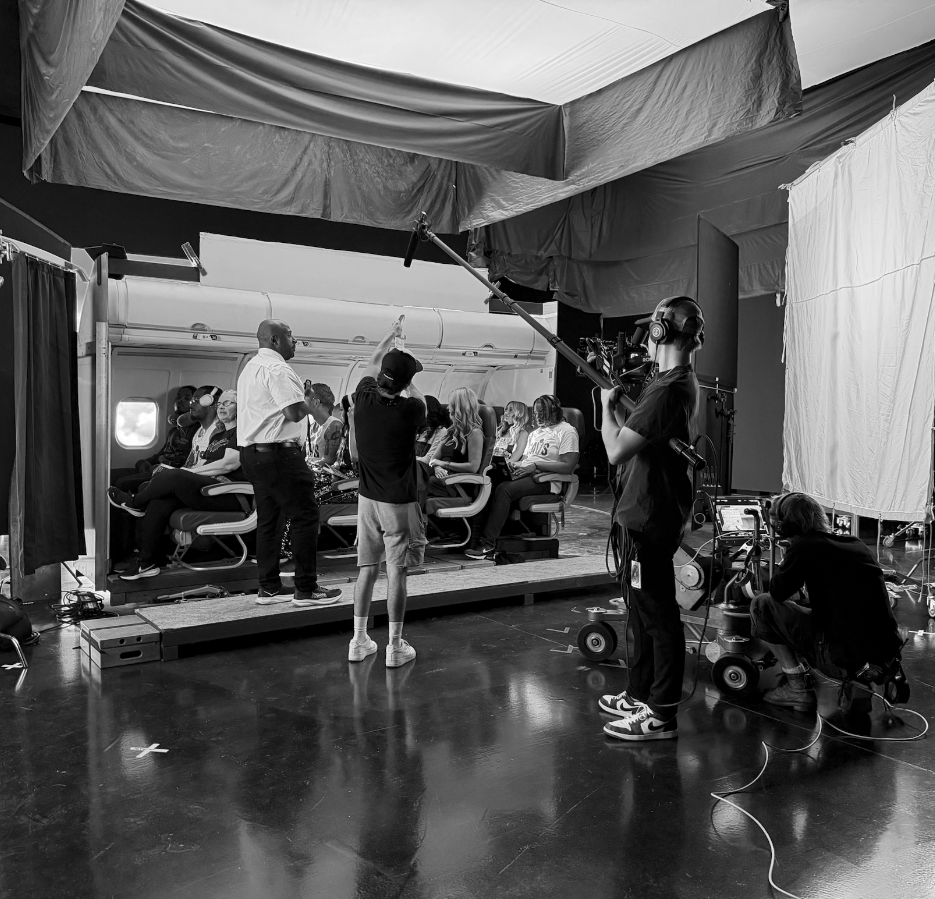
It cannot walk onto a set and notice that the prop styling feels too cold for the audience. It cannot decide that a shadow adds just enough realism to make a product feel grounded. It cannot hear a client describe what they want and translate that into a visual world that feels ownable, polished, and emotionally right.
That is the human layer.
The human layer is strategy. It is taste. It is restraint. It is knowing when something looks expensive, when something feels fake, when something is on-brand but still boring, or when a visual needs one imperfect detail to feel real.
It is the photographer shaping light. The stylist making a product feel lived-in. The set designer building an environment that supports the story. The CGI artist balancing realism and imagination. The retoucher knowing what to clean up and what to leave alone. The director deciding what the audience should feel before they understand why they feel it.
That is not extra. That is the work.
The Future Is Human-Led AI
The most effective creative workflows will not be anti-AI. They will be human-led.
That means using AI where it adds value: speed, scalability, flexibility, testing, cleanup, expansion, and production efficiency. It also means protecting the parts of the process that should remain intentional: concept, art direction, brand alignment, storytelling, production design, and final creative judgment.
Brands do not have to choose between efficiency and quality. They do not have to choose between emerging technology and human craft. The strongest content strategies will use both.
AI can help make production more scalable.
Human creativity makes it worth looking at.
And in a world full of fast, disposable visuals, that may be the real luxury.