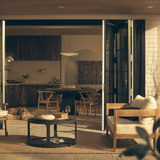
Picture a beautifully designed kitchen. The cabinets are perfectly placed, the island is functional, and every detail makes sense for someone who actually lives there.
Now imagine moving the island three feet to the left, removing an entire wall, and placing a window somewhere that wouldn't make much sense in a real home.
Why?
Because it looks better on camera.
That's one of the interesting things about commercial set design. Unlike traditional interior design, where functionality and everyday use are major priorities, commercial sets are designed around what an audience will see through a lens.
And sometimes, creating the perfect shot means breaking a few design rules.
To learn more about what goes into designing these spaces, we sat down with Tosh, one of our in-house set designers at TRG.
Working closely with our art directors and construction team, Tosh helps turn creative concepts into buildable environments through architectural layouts, 3D renderings, and construction drawings. While art directors focus on the overall creative vision and aesthetic, set designers focus on the space's structure and how it will function for production.
We talked with Tosh about the unique challenges of commercial set design, why designing for the camera is different from designing for real life, and how the smallest architectural decisions can make a big difference in the final shot.
Designing for Real Life vs. Designing for the Camera
At first glance, commercial set design and interior design have a lot in common.
Both involve architectural layouts, materials, and finishes, as well as creating environments that feel intentional. But the priorities can be very different.
In traditional interior design, the goal is to create a space that functions well for the people using it.
In commercial production, the goal is to create a space that functions well for the camera.
Tosh, an in-house set designer at TRG, explains that she often approaches a design from a functional perspective before an art director suggests adjusting a feature to strengthen the shot.
Something as simple as moving an architectural element can completely change the composition of an image.
The result might not be the most practical room to live in, but it can be exactly what a production needs.
Why Camera Angles Influence Set Design
A commercial set is ultimately viewed through a camera, so every design decision must account for what the camera can see. Camera height, lens choice, movement, and framing all influence how a space appears on screen.
A room that feels spacious in person might look cramped through a particular lens. An architectural feature that looks impressive in a rendering might disappear entirely once the camera is positioned.
That's why set designers need to collaborate with photographers, directors, and art directors before construction begins.
At TRG, this can also mean planning around specialized equipment like MILO motion control, which requires additional operating space for precise camera movements.
By understanding the technical requirements early, set designers can create environments that support the creative vision without limiting production.
Sometimes, Less Is More
One of the advantages of building a commercial set is that you don't necessarily need to construct an entire room. If the camera will never see a particular wall, there may be no reason to build it.
Tosh jokes that she would never design a fourth wall, and this flexibility is part of what makes purpose-built sets so useful.
Removing unnecessary walls can provide additional room for cameras, lighting, and crew. It can also create more opportunities to capture different angles without working around the limitations of an existing location.
Rather than adapting a production to fit a real environment, a custom set can be designed to fit the production.
The Role of Art Direction in Commercial Set Design
While set designers focus on the architecture and structure of a space, art directors guide its overall visual direction.
At TRG, those roles work closely together.
Tosh describes the set designer's responsibilities as developing renderings and construction drawings, while art directors focus more heavily on the overall aesthetic, props, and creative direction.
Set stylists then help bring those environments to life on shoot days, arranging the details that make the finished image feel complete.
Each role contributes something different.
A thoughtfully designed set provides the structure. Art direction establishes the visual language. Styling adds the finishing details.
Together, those elements create an environment that supports the story a brand wants to tell.
Creating Something New, Even When the Product Is Familiar
Commercial set design also gives brands opportunities to approach familiar products in unexpected ways.
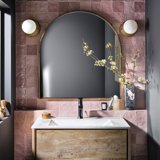
One of Tosh's favorite projects at TRG was a pink bathroom designed for Moen.
The client had worked with TRG on numerous bathroom environments, but Tosh proposed a layout they hadn't seen before. The design was outside her personal aesthetic, which she describes as leaning toward mid-century modern, but that was part of the creative challenge.
Commercial set design isn't about the designer's personal taste. It's about interpreting a brand's creative direction and finding ways to bring something new to the screen.
A Set Is Part of the Storytelling
Great commercial imagery doesn't happen by accident. Every architectural detail, camera angle, material, and design decision contributes to how the final image feels.
Sometimes that means creating an environment that looks completely natural. Other times, it means bending reality to create something more visually compelling.
At TRG, our set designers, art directors, and construction teams collaborate to turn creative concepts into physical environments built specifically for commercial photography and video production.
Because in commercial production, the best-designed room isn't always the one you'd want to live in. It's the one that tells the story best.